


Did you know that 76% of global consumers prefer products with information in their own language?
Localization is no longer optional—it’s essential. In today’s hyper-connected world, businesses need a sharp localization strategy to reach diverse audiences and stay competitive.
This article guides you through developing a global localization strategy, highlights successful examples, and offers actionable steps to localize your brand effectively.
Beyond language, the completeness and clarity of product information are also decisive factors for consumers globally. According to recent studies:
- 77% of consumers say product information is important when making a purchase decision.
- 83% of global consumers are ready to take their business elsewhere if they cannot find sufficient or satisfactory product information.
- 79% are more likely to purchase products with a scannable barcode or QR code that provides additional product details.
- 62% are willing to spend more on a product that offers detailed information.
What is a Localization Strategy?
A localization strategy goes beyond translation. It adapts language, imagery, design, and messaging to match the cultural norms of specific regions.
While translation changes words, localization adjusts the whole user experience. For instance, a slogan that resonates in one country may need a complete revamp elsewhere.
Example: McDonald’s customizes its menus worldwide, offering McSpicy Paneer in India and Teriyaki Burgers in Japan.
Building a localization strategy ensures relevance, builds trust, and fosters loyalty. It embraces cultural adaptation strategy, cross-cultural localization, and effectively adapts content for global audiences.
Why Your Business Needs a Localization Strategy

Expanding globally without a plan can backfire. Here’s why you need a global localization strategy:
- Increased Market Reach: Localizing content unlocks untapped markets and introduces your brand to millions.
- Enhanced Customer Experience: Tailored communication leads to better engagement and loyalty.
- Competitive Advantage: Brands like Coca-Cola and Nike outperform competitors through smart localization.
- Reduced Risks: Avoid embarrassing cultural missteps and legal troubles by adapting content correctly.
Case Study: Netflix dominates international markets by producing region-specific content, catering to local tastes.
A localization strategy is no longer optional for businesses with global ambitions-it is a foundational element for market entry, customer satisfaction, compliance, and sustained growth.
By investing in localization, your business can connect authentically with local audiences, outperform competitors, and build a resilient global brand.
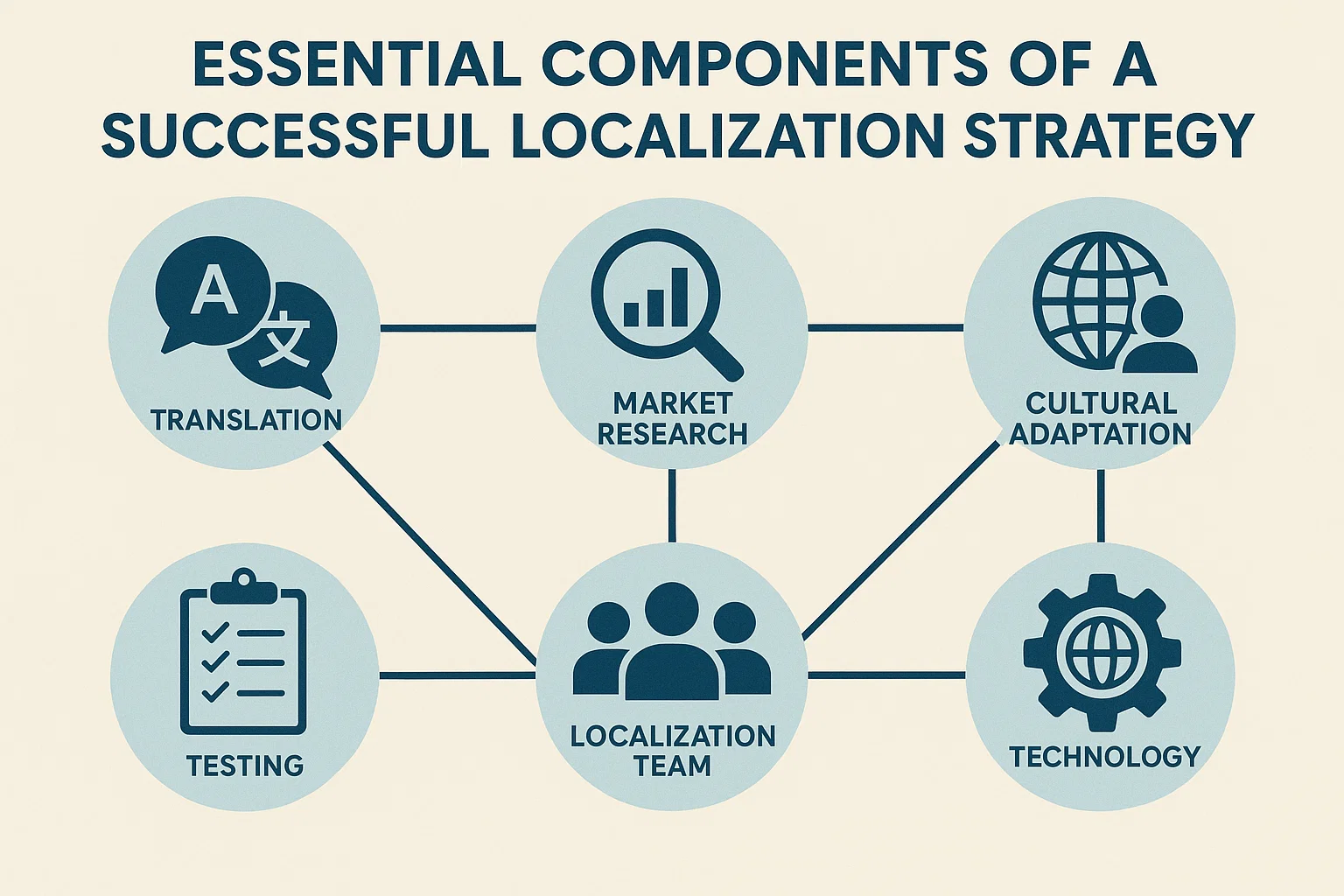
Essential Components of a Successful Localization Strategy
3.1 Market Research
Understanding culture, language, and behavior is non-negotiable.
Tools like surveys, focus groups, and user testing reveal critical insights.
Example: When targeting African countries that speak Spanish, it’s crucial to understand regional dialects and traditions to resonate authentically.
3.2 Cultural Adaptation
Visuals, slogans, and product designs must reflect local customs.
A memorable brand localization example is Coca-Cola’s “Share a Coke” campaign, featuring popular local names worldwide.
3.3 Technology in Localization
Localization automation tools and translation management systems (TMS) simplify workflows and ensure consistency.
Using these tools results in faster rollouts and lower costs.
3.4 Localization Workflows
Seamless localization project management is vital.
Combining AI-driven localization strategy with human expertise guarantees both efficiency and accuracy.
A localization workflow is a structured series of steps that guide the adaptation of products, services, or content for different languages and cultures.
While workflows may vary by project type (e.g., software, website, marketing), most share a set of core stages designed to ensure quality, efficiency, and cultural relevance
Step-by-Step Guide to Building a Localization Strategy
4.1 Step 1: Conduct Market Research
Identify cultural nuances, preferences, and compliance requirements.
Analyze competitors, local behavior, and regulatory frameworks using tools like Google Trends.
4.2 Step 2: Develop a Localization Plan
Prioritize content: websites, mobile apps, marketing materials, and support services.
Strategize based on business type—whether it’s an e-commerce localization strategy, SaaS localization strategy, or video game localization strategy.
4.3 Step 3: Choose the Right Localization Partner
Select experts familiar with your industry and target audience.
For instance, companies expanding into gaming markets should collaborate with professional game localization services.
4.4 Step 4: Implement Localization Workflows
Integrate workflows into daily operations.
Automation boosts productivity but never replace expert human reviewers.
4.5 Step 5: Test and Optimize
Pre-launch testing is critical.
Use A/B testing, feedback from native speakers, and focus groups to refine your localized products.
Common Challenges in Localization (And How to Overcome Them)
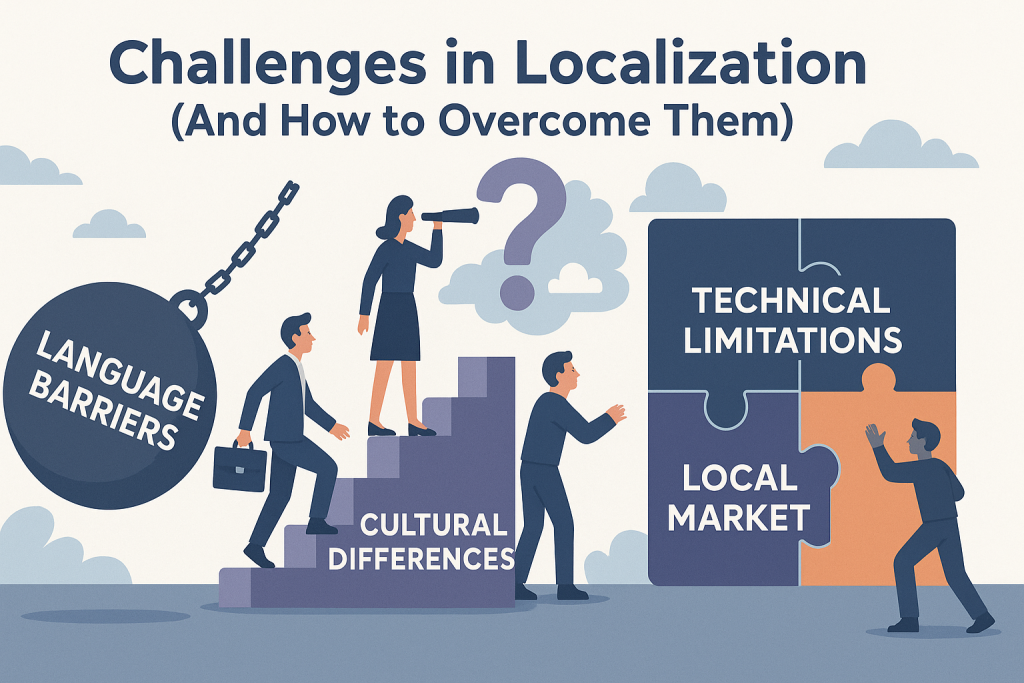
- Language Barriers: Only native speakers can ensure accuracy and cultural appropriateness.
- Cultural Sensitivity: Poorly adapted content can offend; using local experts prevents costly mistakes.
- Regulatory Compliance: Laws vary. Collaborate with specialists familiar with regional regulations.
Solution: Partner with seasoned providers like African Translation Services to ensure precision and cultural relevance.
Examples of Successful Localization Strategies
Global brands excel by tailoring their products, services, and experiences to resonate with local audiences. Here are standout examples of effective localization strategies:
Netflix
- Customized Content: Netflix adapts not just its interface and subtitles but also creates original series and films for specific markets. For example, in India, “Sacred Games” was produced in Hindi and steeped in local culture, while in countries like Japan, Germany, and France, Netflix prioritizes dubbed content to match local viewing preferences.
- Personalization: The platform personalizes recommendations, visuals, and even movie posters based on user preferences and regional tastes, ensuring a unique experience for each viewer.
Airbnb
- Multilingual Platform: Airbnb’s website and app are available in over 60 languages, with user-generated content (like reviews and listings) also translated for local audiences.
- Cultural Adaptation: Beyond translation, Airbnb adapts currencies, date formats, and even sign-up methods (e.g., enabling WeChat and Weibo logins in China), making the platform feel native in every market.
- Local Guides: The company offers localized travel guides and tips, enhancing the sense of belonging for travelers worldwide.
Domino’s Pizza
- Menu Customization: Domino’s adapts its menu to reflect local tastes and dietary restrictions, such as offering vegan pizzas in India and squid toppings in Japan. This approach helps the brand remain relevant and appealing across diverse markets.
Coca-Cola
- Localized Campaigns: The “Share a Coke” campaign replaced the brand’s logo with popular local names on bottles, personalizing the product for each market. The campaign was adapted for countries like Ireland, China, and India, using names and phrases that resonate locally.
Nintendo
- Simultaneous Localization: Nintendo integrates localization experts into the game development process from the start, ensuring that games are culturally and linguistically appropriate for each market upon release. This approach maintains consistency and quality across global launches.
Starbucks
- Store Design and Offerings: Starbucks adapts store designs to fit local architecture and culture, such as blending with traditional wooden storefronts in Kyoto, Japan. The brand also customizes its menu to include local flavors and preferences.
ASOS
- Localized E-commerce: ASOS translates product information into multiple languages, offers various payment methods and currencies, and provides region-specific promotions, driving significant international growth.
These brands shine by adapting content for global audiences through intelligent, strategic localization.
Why Localization is the Key to Global Success
Localization transforms your brand from being just “available” to being truly “welcomed” in new markets.
It unlocks new revenue streams, enhances customer loyalty, and secures your global footprint.
Ready to take your brand global?
Our African Translation Services and game localization services ensure your content speaks directly to every audience.
Explore opportunities in African countries that speak Spanish and beyond.
Act now and lead your brand to global success!
Frequently Asked Questions About Localization Strategy
What is a Localization Strategy?
A localization strategy adapts products, content, and services to fit the culture, language, and expectations of specific markets.
Why Do Businesses Need Localization?
It builds trust, boosts customer satisfaction, and helps brands avoid cultural pitfalls.
What Are the Key Steps to Building a Localization Strategy?
Conduct market research, develop a plan, select the right partners, implement workflows, and test thoroughly.
How Important is Market Research in Localization?
It’s crucial. Without understanding the audience, your efforts could miss the mark entirely.